Planning a family trip to Death Valley National Park? Here’s a great 2-day itinerary full of ideas of what to see in Death Valley with kids!
A couple of months back, my family and I hit the road from Southern California for a trip to Death Valley National Park and Las Vegas. We hiked at Red Rock Canyon (loved!), spent a fun day on the Las Vegas strip, and had a blast exploring Death Valley National Park.
And so, today I’m sharing some ideas for what to see in Death Valley with kids! Keeping it family-friendly, the hikes and walks that I feature in this article are easy enough for a child to do (with the occasional helping hand and piggy back ride of course!). Since the park is so massive and you can drive for hours within it, I’m breaking my ideas down into a relaxed 2-day itinerary free of excessive amounts of driving – exactly how we experienced it!
What Makes Death Valley National Park Impressive
Covering over 3.4 million acres across California and Nevada, Death Valley is the largest national park in the contiguous United States. It’s also considered the hottest place on Earth! The park holds the record for the highest officially registered air temperature of 134 degrees Fahrenheit.
Additionally, Death Valley contains the lowest point in North America at the Badwater Basin, which has a depth of 282 ft below sea level. It’s a national park with a lot of remote land and high mountain ranges.
When to Visit
Because of the extreme heat and arid conditions in Death Valley during the summer, visiting at that time is not advised. For a more comfortable experience, plan your trip between November and April, when temperatures are significantly milder.
We visited in November over Thanksgiving week, and had perfect 65-75 degree hiking weather.
Where to Stay
If the sole goal of your trip is visiting Death Valley, there are four lodging options inside the park. There are also camping options within Death Valley National Park. Since we wanted to spend time in Vegas as well, we opted to stay at an Airbnb in Pahrump, Nevada, within 1.5-2 hours from all of the destinations that I mention in this article. Other towns to consider staying include:
- Beatty, Nevada
- Shoshone, California
- Las Vegas, Nevada
- Lone Pine, California
- Ridgecrest, California
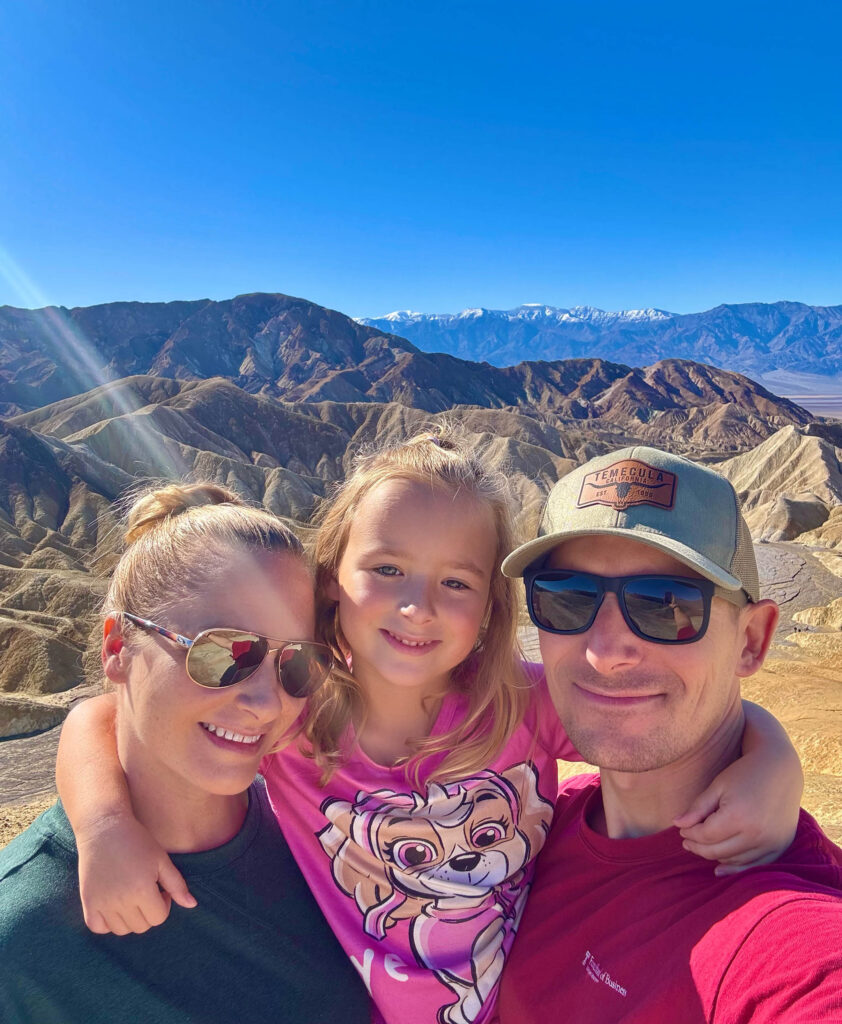
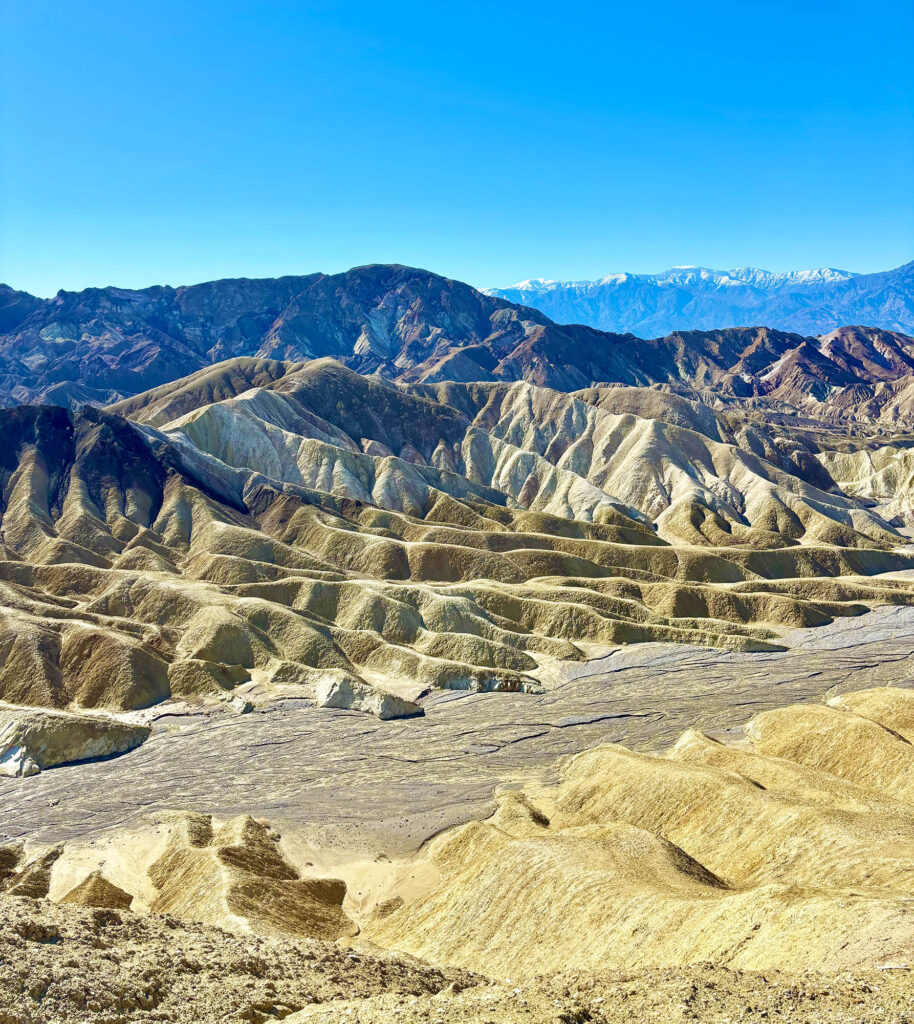
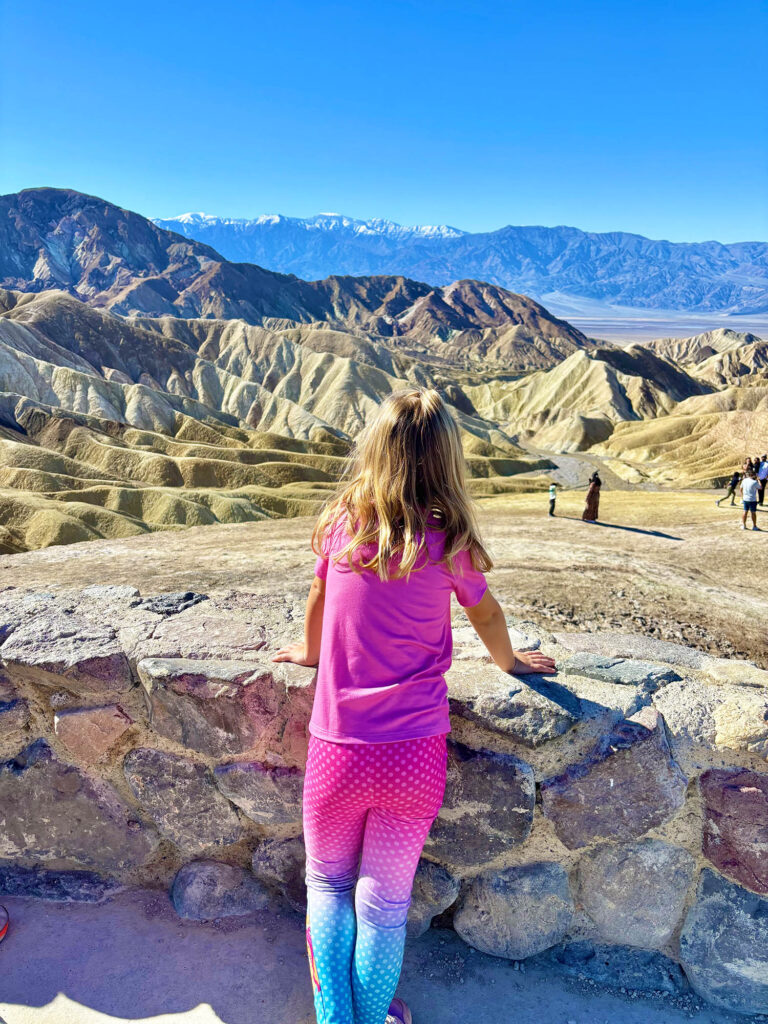
The view from Zabriskie Point is not to be missed!
Death Valley Day 1 Itinerary
Stop 1: Visit Zabriskie Point
The first must-do spot that you’ll come across if you’re coming in from the Furnace Creek side of the park is Zabriskie Point. This is one of the most touristy spots within Death Valley, and it’s easy to see why. Zabriskie Point is an iconic Death Valley vista! It’s a very accessible lookout point that requires almost no effort to get to take in the gorgeous mountain formations… and snap some photos of course!
Stop 2: Stroll around Badwater Basin Salt Flats
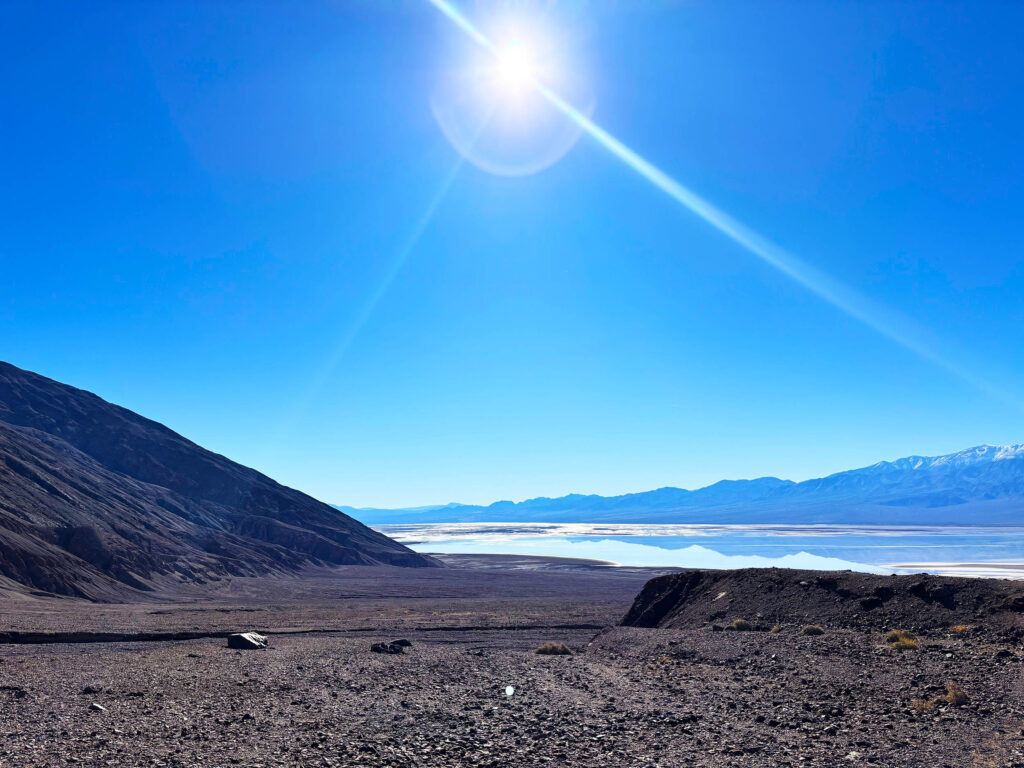
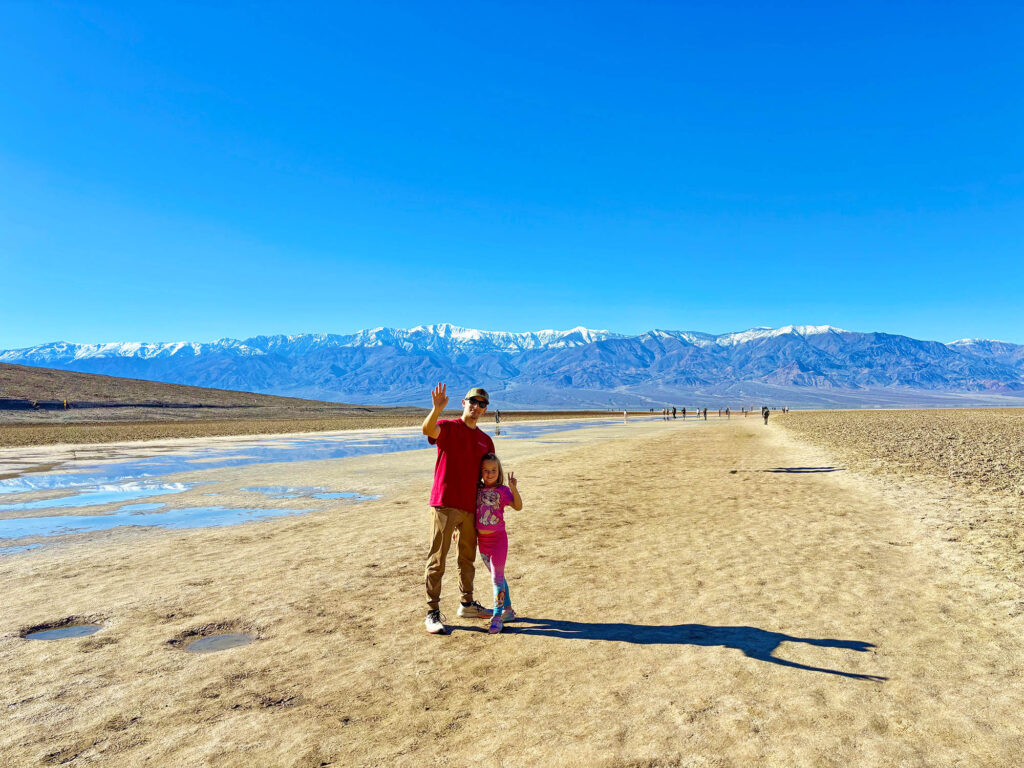
After visiting Zabriskie Point, drive about 25 minutes north to the Badwater Basin Salt Flats. At 282 feet below sea level, Badwater Basin is the lowest point in North America! The salt flats cover nearly 200 square miles, and are composed mostly of sodium chloride, calcite, gypsum, and borax.
Stroll around and take in the views of the surrounding mountain peaks, and make sure to spot the sign in the Black Mountains to the east that indicate where sea level is. It’s about a mile walk there and back to the edge of the salt polygon formations. The flat, open area also offers a 7-mile or 2-mile walk. You may also be able to check out Lake Manly, a temporary lake formed by rainwater draining into the lowest part of the basin.
Stop 3: Hike the Natural Bridge Canyon Trail
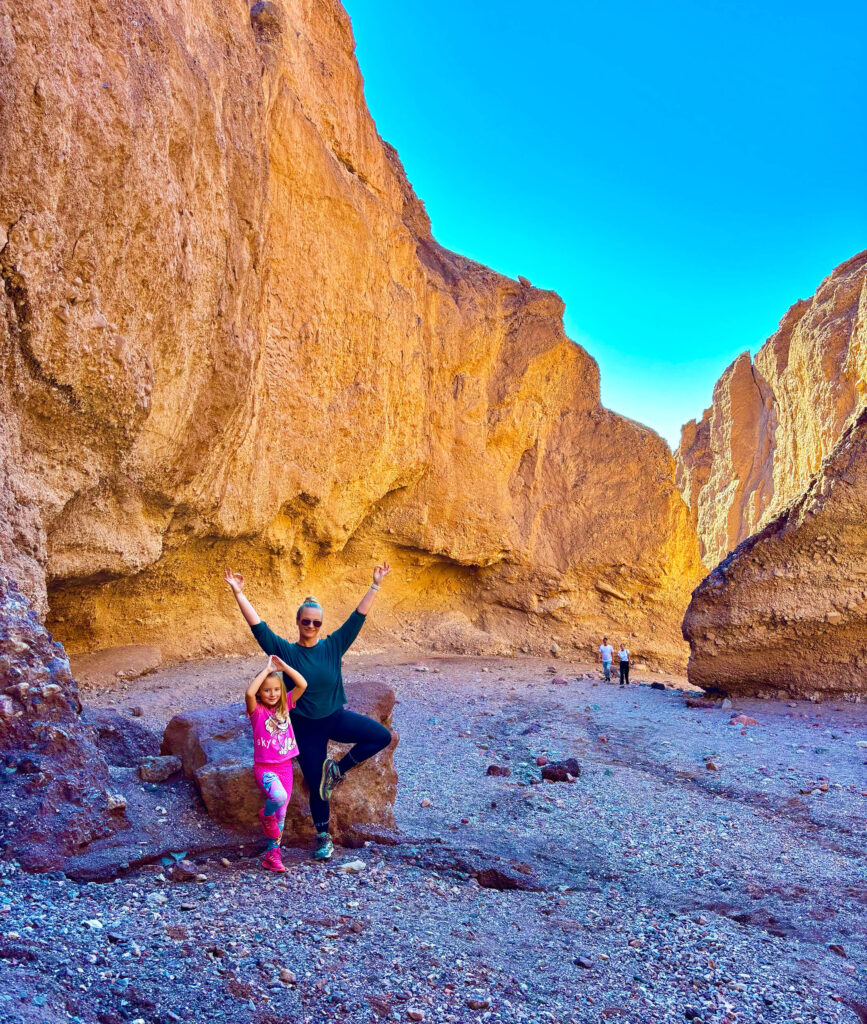
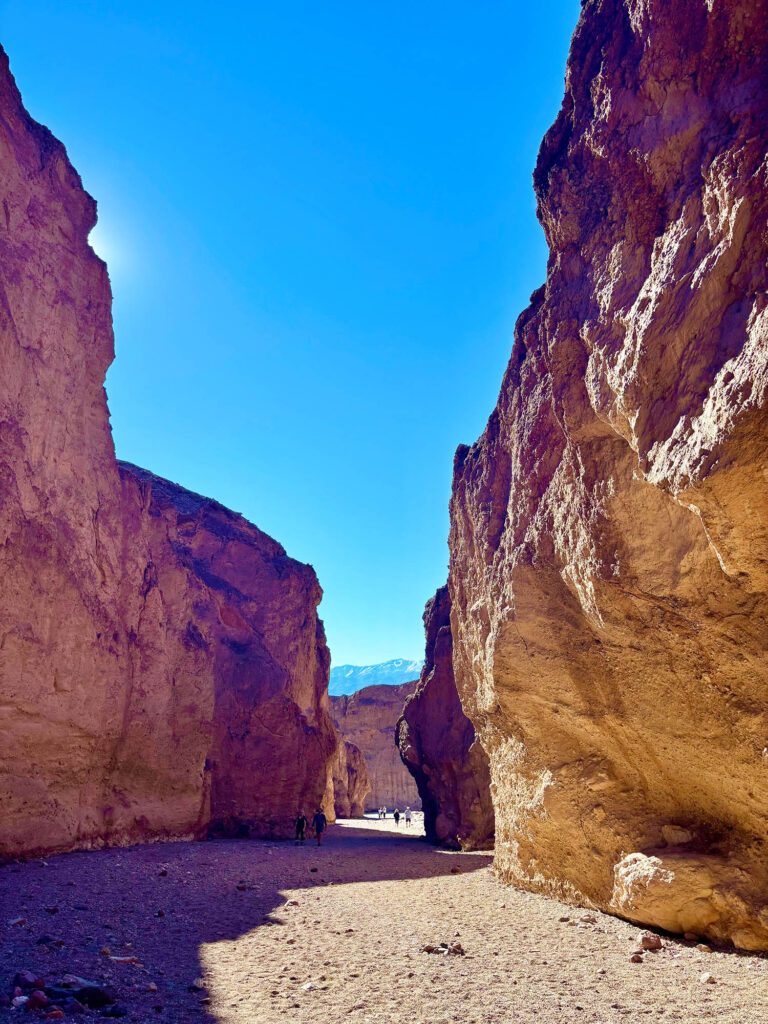
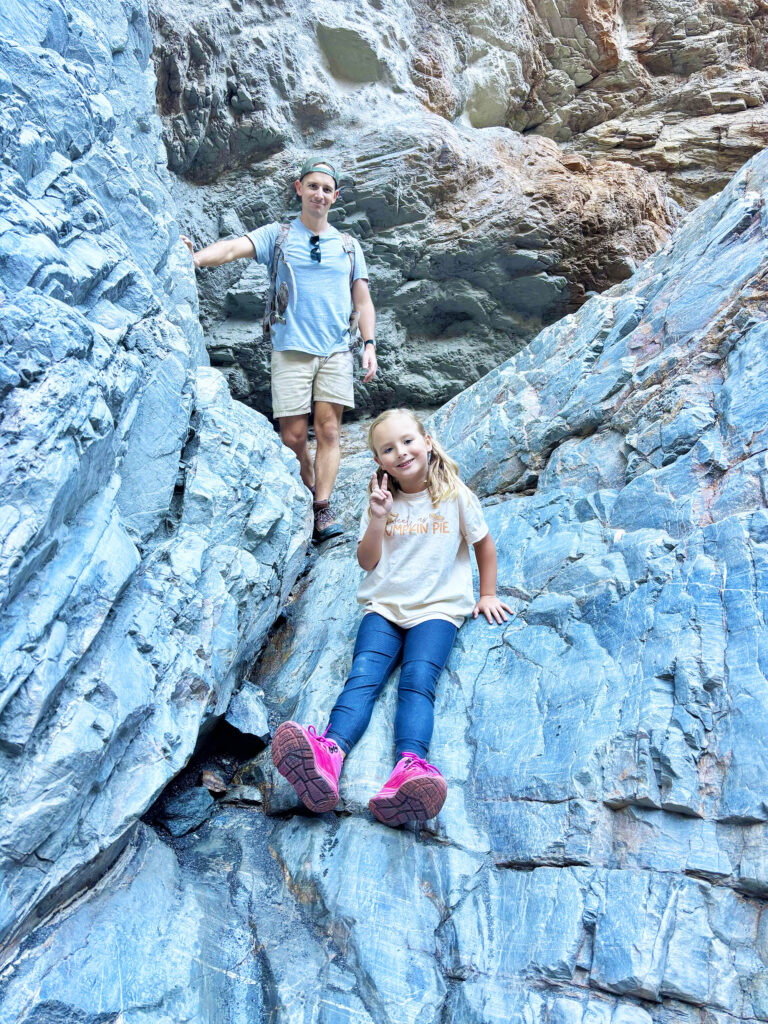
From the Badwater Basin, Natural Bridge Canyon Trail is just a couple of miles further into the park. This great short out & back canyon hike is a great way for families to explore Death Valley. The rock gravel trail features stunning geological formations and lots of opportunities to climb around, which both my husband & 6-year old thoroughly enjoyed!
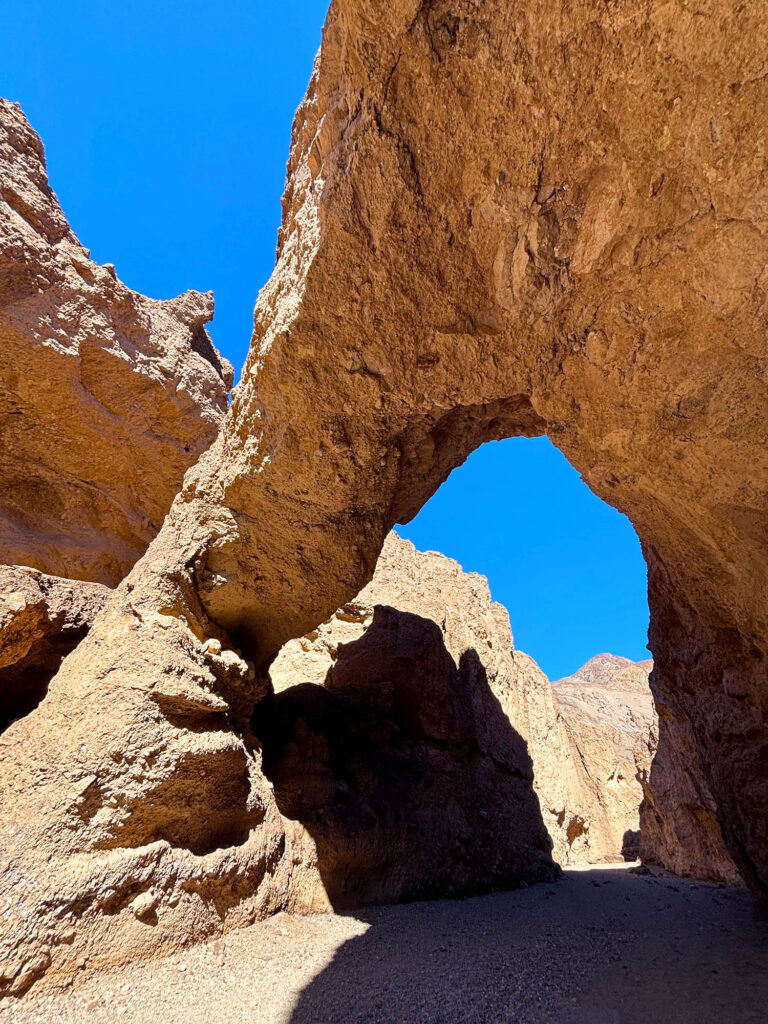
The Natural Bridge itself is interesting because it’s made of a jagged rocky alluvial deposit – rock, gravel, and sediment washed to the base of an ancient mountain and cemented together – that towers about 35 feet above the canyon floor. Geological highlights of the hike includes dry falls, vertical chutes, and hanging canyons.
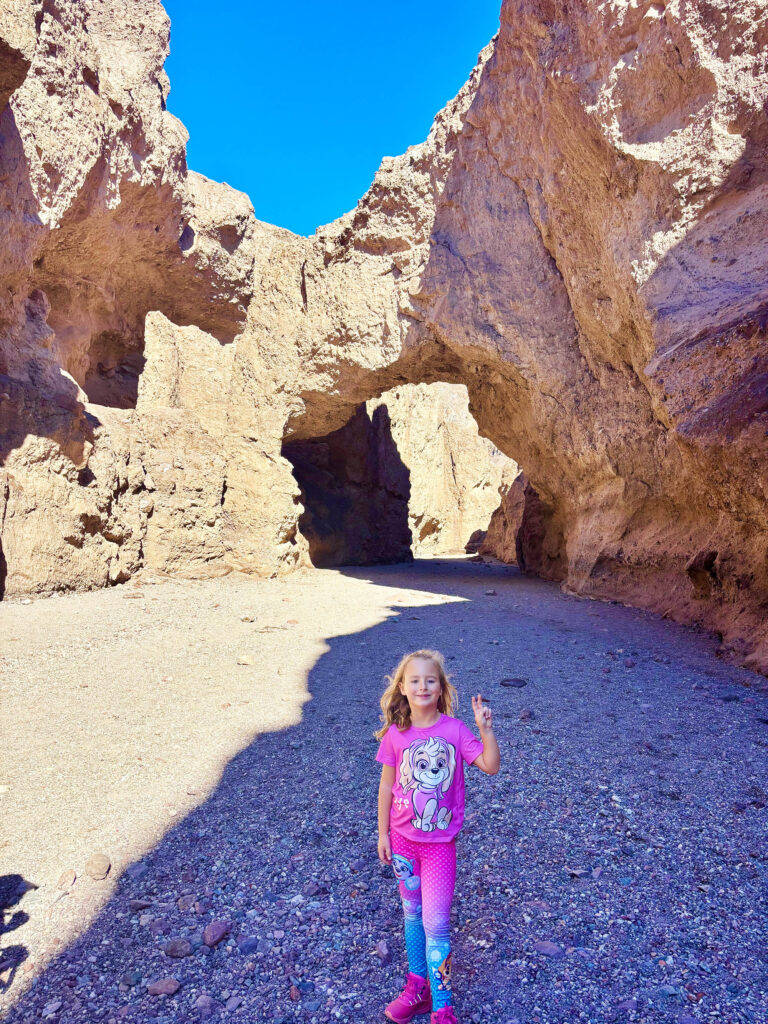
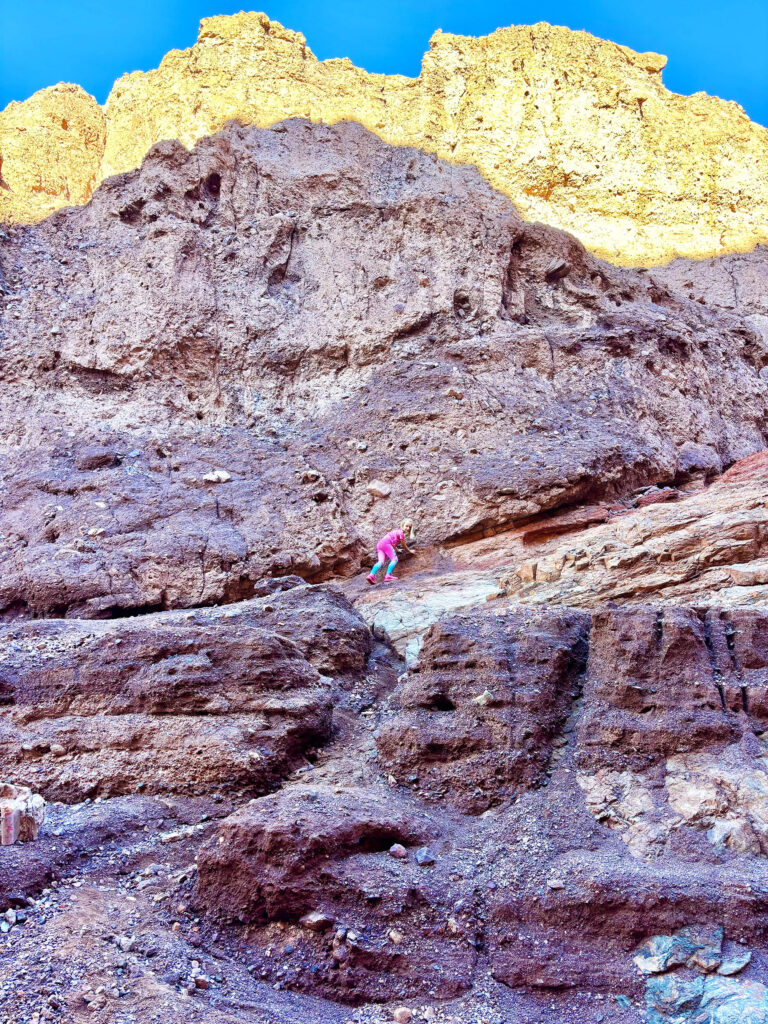
We made our way past the bridge and hiked into the canyon as far as we could go. Before heading back, we hung out on the rocks for awhile with water and snacks, while my daughter worked on her bouldering skills. It was the perfect way to cap off our unforgettable first day in Death Valley.
Death Valley Day 2 Itinerary
Stop 1: Mesquite Flat Sand Dunes
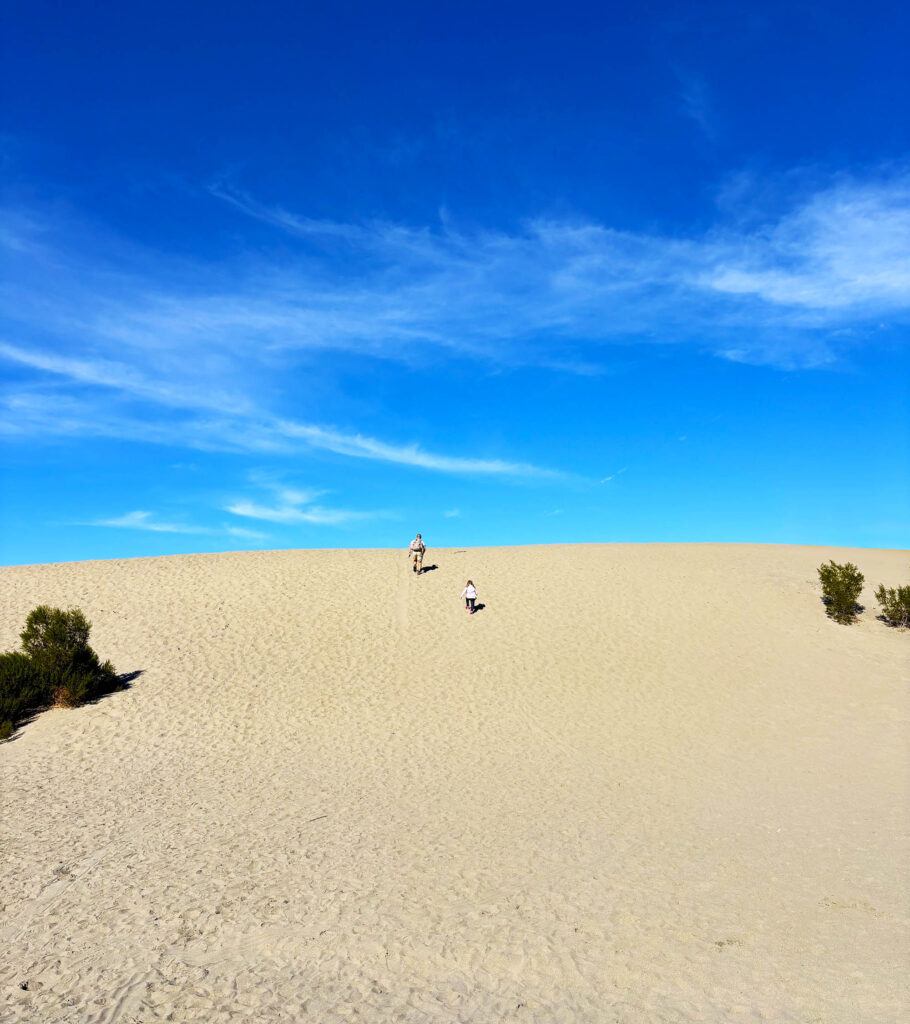
Moving onto Day 2 at Death Valley, start the day exploring the Mesquite Flat Sand Dunes, which are near the Stovepipe Wells area of the park. Of the five sand dune areas within Death Valley, Mesquite Flat is the best known and easiest to visit.
The best part? Visitors can go sledding down the dunes!
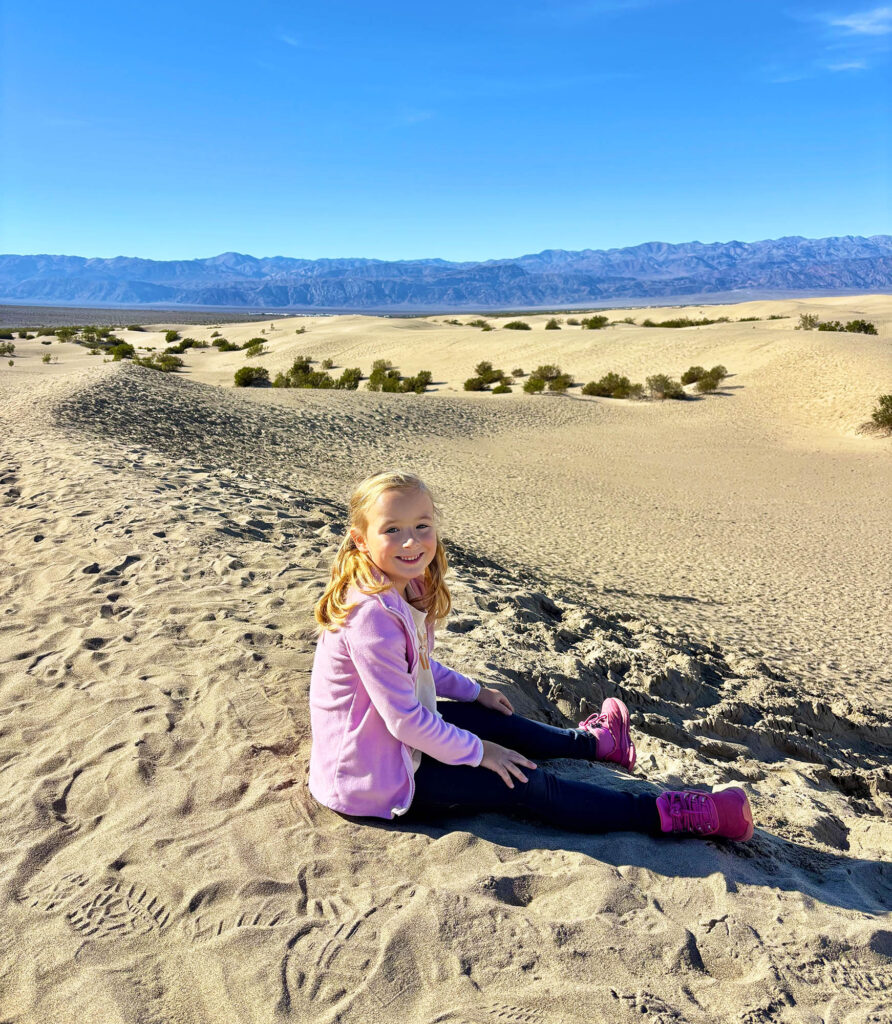
Sledding down the dunes was the most thrilling part of my daughter’s day! A communal sled had been left for everyone to enjoy, and it was so much fun watching her and all of the other kids take turns sledding down and then running back up.
Death Valley doesn’t sell or rent sleds within the park, so I’d recommend purchasing plastic saucer sleds elsewhere on your way into the park if you want to guarantee some dune sledding. You can also opt to do this moderately rated 2 mile hike to explore the dunes more. Sand boarding is also allowed at Mesquite Flat if you’d like to bring the gear along.
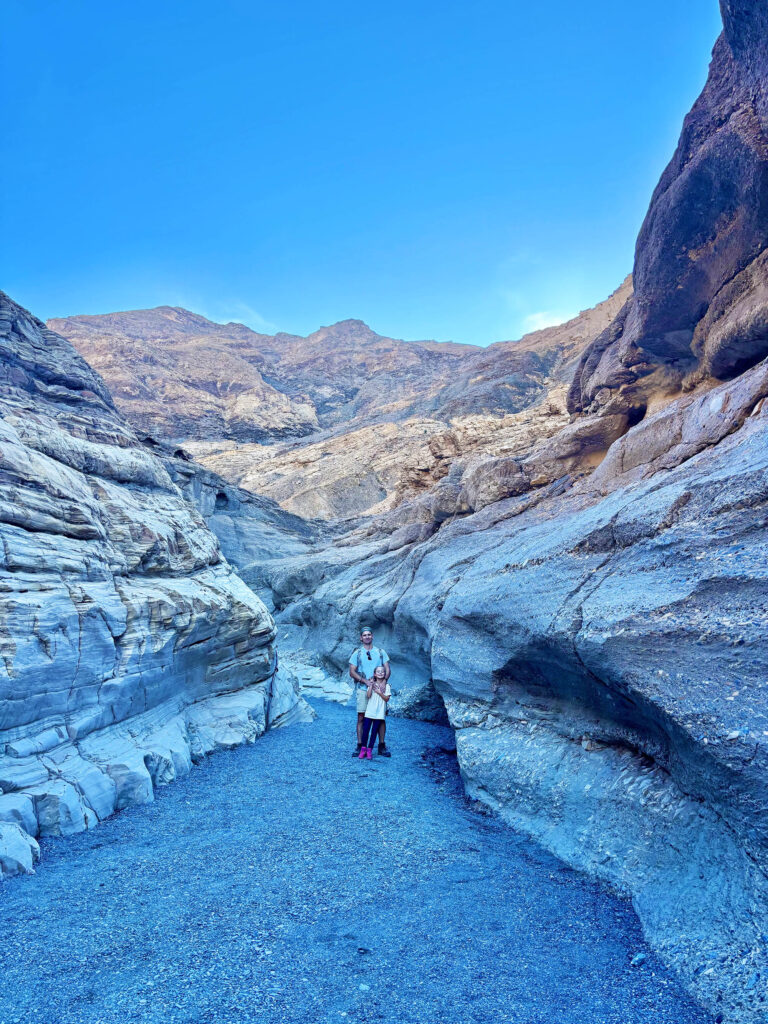
Stop #2: Hike Mosaic Canyon Trail
A couple of miles from the sand dunes, there’s a bumpy, unpaved gravel road that leads to the Mosaic Canyon trailhead. The hike is a 4-ish miles out and back with 974 ft elevation gain – a nice workout in my book!
Younger kiddos may not be able to complete the whole trail, as it does require some scrambling and rock climbing, but the views and rock formations are gorgeous from the start so it’s worth it to even only get 30 minutes in.
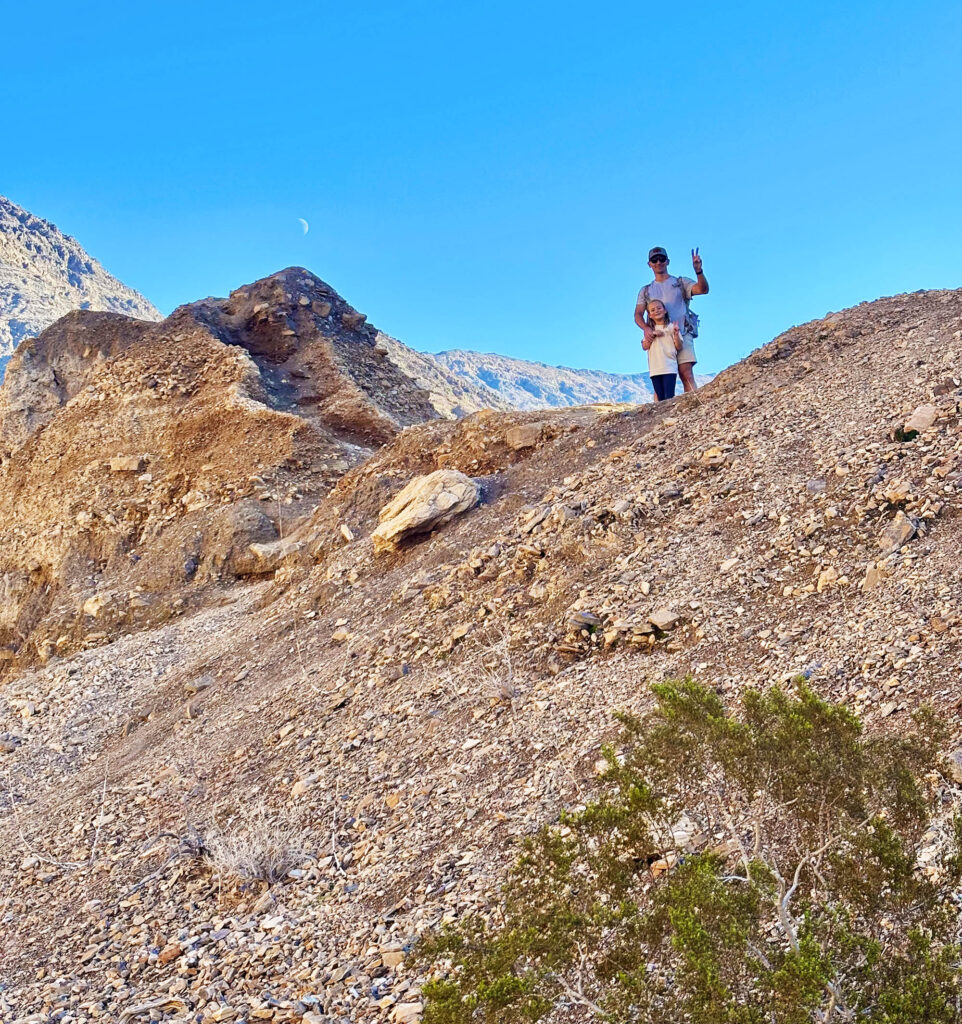
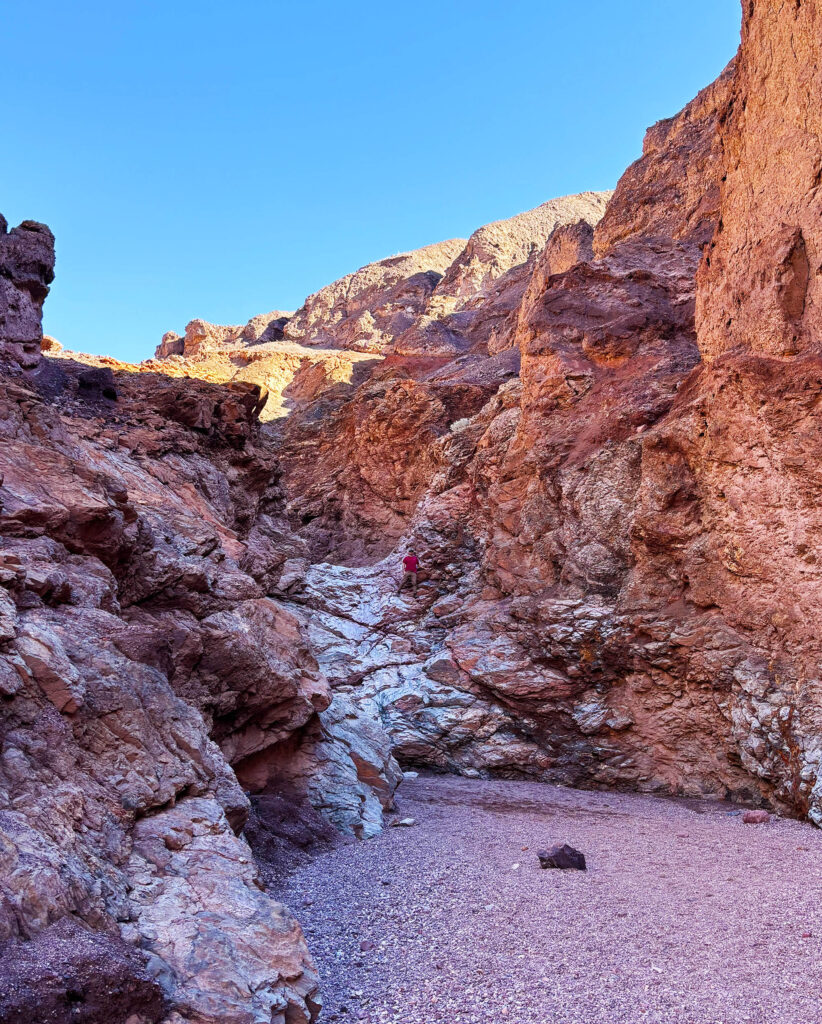
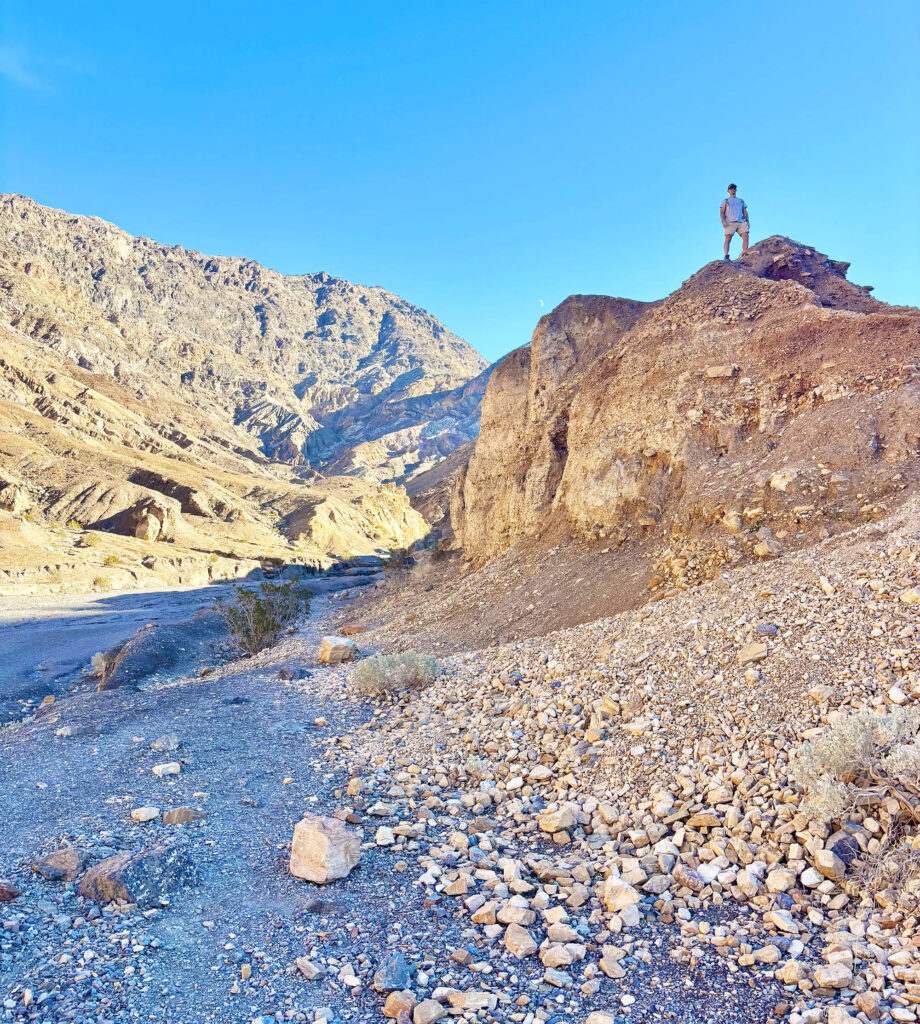
I was impressed with the variety of rock formation colors and textures throughout the hike. My daughter particularly loved climbing and bouldering around. In fact, we moved through this trail rather slow because she wanted to climb something every few steps (or so it felt like!).
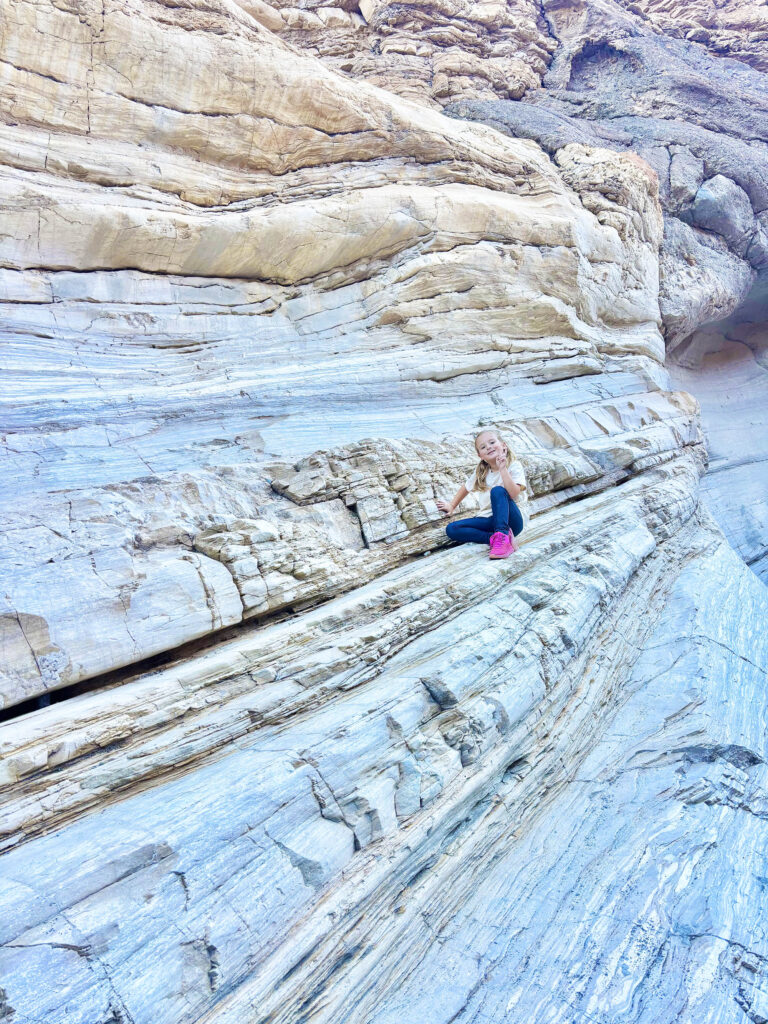
Fun fact: Mosaic Canyon has experienced flash floods, and its narrows (like the one shown above) have been polished smooth by the scouring of debris-laden flood water.
Between the beautiful slot canyons, challenging rock scrambling, and moderate trail length, Mosaic Canyon is our favorite kind of hike! I recommend wearing hiking boots (or at least sturdy sneakers) and workout clothing, bringing water and snacks, and allotting three hours for the hike.
Stop #3: Refuel at Stovepipe Wells
After your hike, chances are good that you need a bite to eat, or at least a bathroom break. You’ll hit Stovepipe Wells on your way out from the trail road, and it offers The Toll Road Restaurant and The Badwater Saloon as dining options, The General Store supply shop, gas and EV charging stations, and the Nugget Gift Shop.
Death Valley National Park is an amazing place full of opportunities for adventure. We had a blast exploring some of the park and look forward to returning again someday! I hope you found my ideas of what to see in Death Valley with kids useful.
Someone is growing up so fast!! We’ve only been out West a couple of times, but this looks like an amazing trip. I had no idea Death Valley is 3.4 million acres!
I know right?! Time, slow down!
Yeah Death Valley is massive! And it gets so hot in the summer, so it’s wild to picture all of that diverse terrain in 130 degree temps!
Death Valley looks amazing!!